
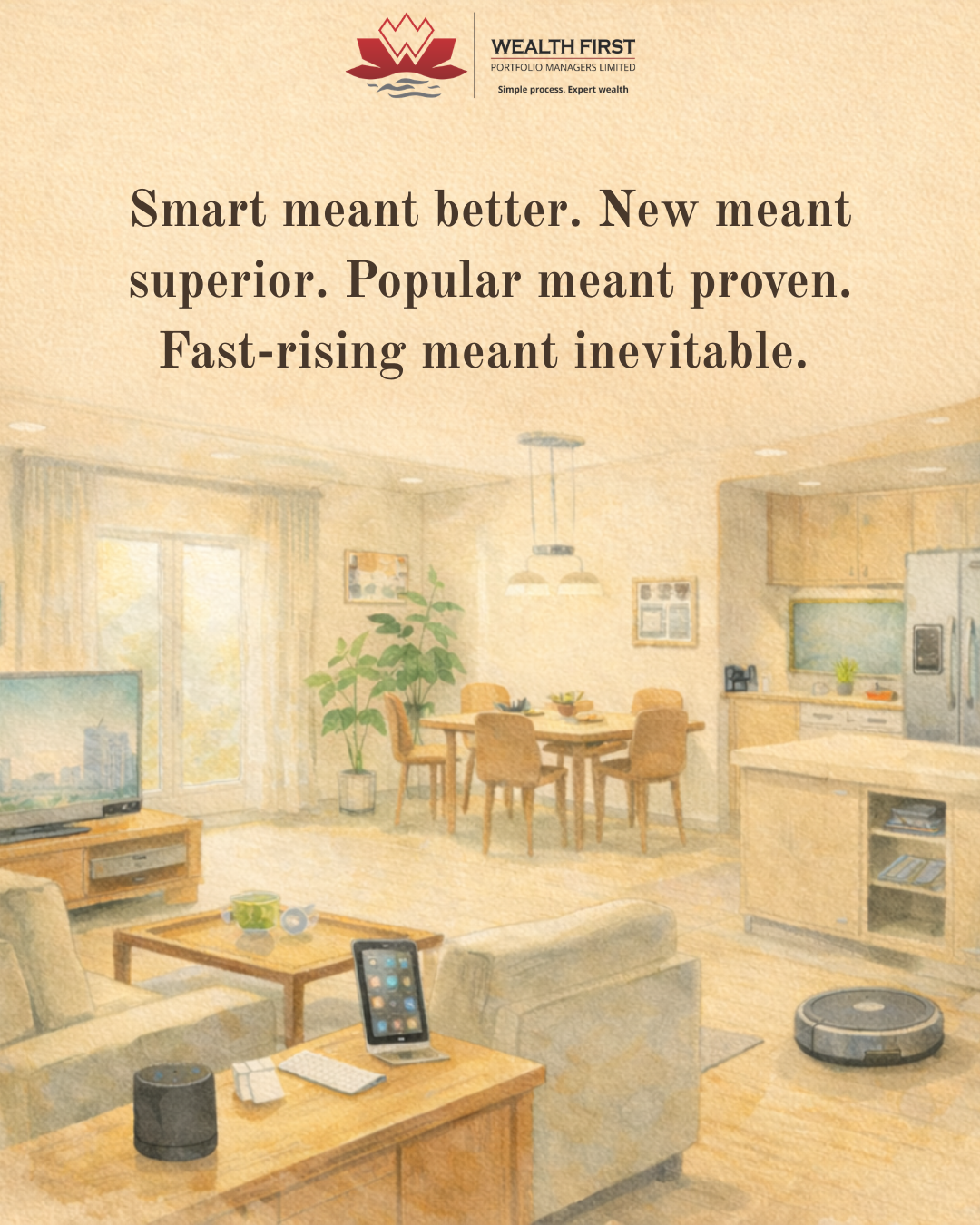
An emotional story about smart living, seductive labels, and what they quietly reveal about the way we invest.
Rohan was not the kind of man people called impulsive. He was the one in the family who compared prices before ordering groceries, checked electricity bills line by line, and remembered which neighbourhood shop quietly added a little extra for convenience. When something broke at home, his first instinct was not a replacement, but a repair. Sensible people trusted his judgement because he usually gave them a reason to.
That was why nobody objected when he announced, one Sunday afternoon, that the house needed to become “smart”. It began with one bulb, then a door lock.
Then came a speaker that could answer questions, remember birthdays, and play old songs for his mother when she visited. After that came smart plugs, smart curtains, a smart air purifier, a smart camera, a smart kettle, and a smart doorbell that could send alerts even when the house was empty. By the time the festive sale season was over, Rohan had built a small universe of glowing apps, paired devices, and passwords, each promising the same thing in slightly different language: better, faster, future-ready.
And honestly, for a while, it did feel impressive.
Guests noticed the lights first. His daughter liked asking the speaker silly questions. His wife admitted the video doorbell was useful when deliveries came late. And Rohan, somewhere between traffic signals and office tea breaks, discovered the quiet thrill of controlling the house from his phone. It made him feel as though he had stepped half a pace ahead of everyone else.
That feeling, more than the gadgets, became the real purchase. Without noticing it, he stopped asking whether a thing solved a problem. He started asking whether it belonged to the future.
The old switchboard still worked. The lock on the study door had never failed. The curtains opened just fine with a hand. But suddenly those ordinary things looked outdated, almost embarrassing, as if simplicity itself had become inferior. Once a label starts carrying prestige, it becomes difficult to see the thing underneath it.
And labels, when they become fashionable, do something dangerous to the mind. They stop sounding like descriptions and begin sounding like verdicts.
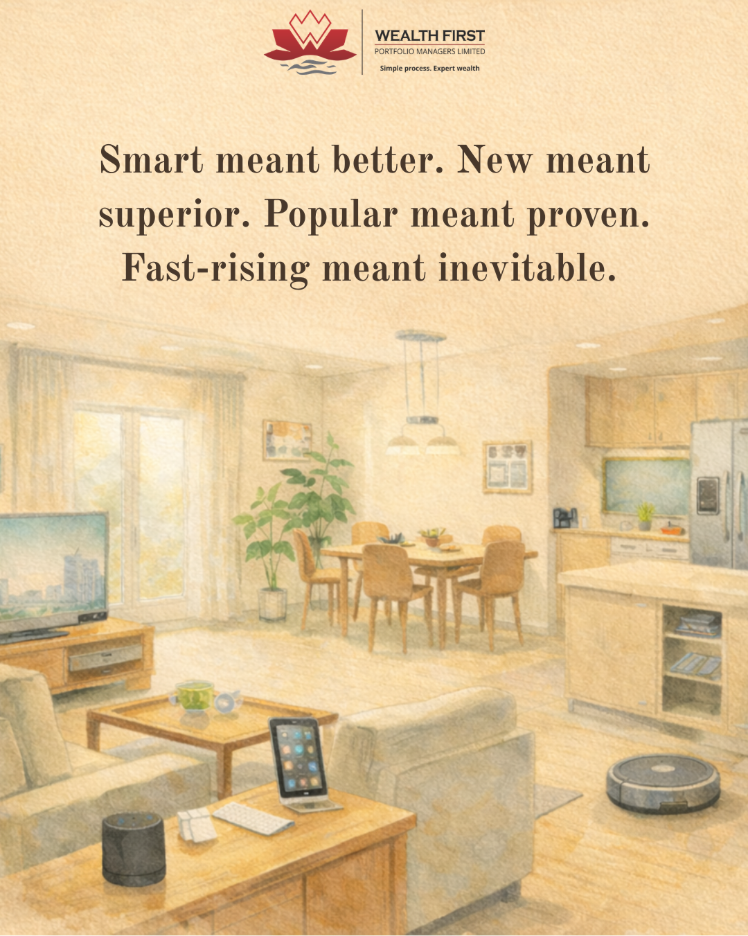
Smart meant better. New meant superior. Popular meant proven. Fast-rising meant inevitable.
Rohan never said any of this aloud. Most people never do. They simply begin to behave as though the conclusion has already been reached. So the house kept getting smarter.
Then came the first evening when the internet stopped working. It was a small outage, the kind people usually ignore for a few minutes before complaining. But in those twenty-three minutes, the front door refused to respond properly, the living room lights lost sync, the speaker kept apologising for not understanding, and the curtains froze halfway like a stage scene interrupted in the middle. Rohan’s daughter stood in the hallway and asked the most inconvenient question possible, “Why does the house need Wi-Fi to be a house?”
Nobody answered immediately.
His mother, who was visiting that week, opened the storage cabinet, found the old emergency lamp, switched it on, and placed it in the centre of the room. In its plain yellow light, everything looked faintly absurd. The expensive devices were still there, sleek and silent, but suddenly they looked less dependable than a plastic lamp bought years ago without any promise of changing the future.
The internet returned. The house returned. Life moved on. But a hairline crack had appeared in the story.
Rohan noticed it again a month later when the smart-lock app updated and signed everyone out. Then when one subscription quietly renewed itself. Then when two devices stopped talking to each other because one no longer supported the other. Then when an electrician, very politely, asked him which switch now controlled what, and Rohan could not explain it without opening three separate apps.
It was not that the technology was useless. Some of it was genuinely helpful. Some of it might become even more useful with time. That was what made the lesson uncomfortable. The idea was not false. The excess was. And that is often how bubbles first learn to look respectable.
Not as lies. As truths carried too far. A useful technology can be real. A meaningful shift can be real. A change in the way the world works can be real. But somewhere between “this may matter” and “this can only go up”, people have a habit of removing the hardest parts of judgement: price, patience, and proportion.
In investing, this rarely arrives looking reckless. It arrives wearing confidence.
It sounds current. It sounds informed. It sounds as though hesitation belongs to those who do not understand the future. Slowly, a powerful theme starts doing the work that careful thinking was supposed to do. People begin to feel that if something is shaping tomorrow, then anything attached to it must automatically be worth buying today. Questions that once felt basic begin to seem boring. What is already being assumed? How much hope is built into the price? What happens if the idea is right, but expectations have run too far ahead? What happens when a good story becomes too crowded?
These are not dramatic questions, which is exactly why crowds do not enjoy them. Crowds prefer momentum with music in the background.
The trouble is that markets do not reward excitement simply because excitement feels intelligent. Sometimes the shift is real and the investment still disappoints. Sometimes the business is sound and the entry price is too rich. Sometimes the story is correct, but the timing is not. And sometimes people are not really buying the future at all. They are buying relief from the fear of being left behind.
Rohan understood this slowly, not through one grand revelation.
It began with the bathroom mirror that displayed weather updates nobody needed while brushing their teeth. Then the smart plant sensor that sent moisture alerts while his mother continued, quite successfully, using her finger and experience. Then the second speaker in the guest room, which rarely had anything useful to say but still lit up unexpectedly at 2 a.m., like a guilty thought.
One Saturday, he sat on the floor with three cardboard boxes beside him: one for things to keep, one for things to return, and one for things he could neither justify nor let go of yet. His daughter sat next to him, peeling old stickers off a remote. “Are we making the house dumb again?” she asked. He smiled. “Maybe just easier.”
That evening, the family ate dinner without lights changing colour, without a voice assistant cutting into the silence, without an alert announcing movement near the door when it was only the watchman doing his round. The ceiling fan turned with the same faithful hum it always had. Ordinary things, when they work well, carry a dignity that fashionable things often borrow and rename as innovation.
And yet, even then, the story did not end neatly.
Because the next morning, while walking through an electronics store to buy something entirely unrelated, Rohan stopped in front of a display for a new home system. Cleaner interface. Better compatibility. Smarter automation. Fewer apps. More control. The demo screen showed a life that looked elegant again, effortless again, just ahead of the curve again.
He stood there longer than he meant to. Not because he had learned nothing. Because he had learned something more honest: intelligent people are not immune to seductive stories. They are often simply better at explaining those stories to themselves.
The label had changed shape, but the temptation had not. Once again, a powerful idea had arrived dressed as an easy conclusion. And there he was, looking at it, not foolish, not reckless, not naïve.
Just human.
Quest Question:
When an investing story feels too powerful to ignore, are you responding to the strength of the idea, or to the comfort of believing that this time expectations no longer need discipline?
A small routine to carry forward:
Before following any fast-rising theme, pause and write down three things on one page: what the business actually does, what the current price may already be assuming, and what could still go wrong even if the bigger idea turns out to be true.