

A Journey Through Colonial Legacy, Monsoon Cycles, and the Soul of Indian Prosperity.
In many Indian households, the arrival of spring is marked by more than just the blossoming of Gulmohar trees or the preparation for festivals like Baisakhi, Ugadi, and Gudi Padwa. There is a specific, bustling energy that fills the air; a period often referred to as “March Ending.” Whether it is a father meticulously organizing receipts at the dining table, a local shopkeeper updating his Bahi Khata (traditional ledger), or the late-night lights glowing in corporate offices, this period signals a deep-rooted transition.
While the world celebrates the New Year on the first of January, the Indian economic heartbeat follows a different drumbeat, beginning its journey on the first of April. For the mature investor and the young professional alike, understanding this cycle is not just about tax deadlines; it is about understanding the soul of India’s economic history and its relationship with the land.
A Legacy of the Raj
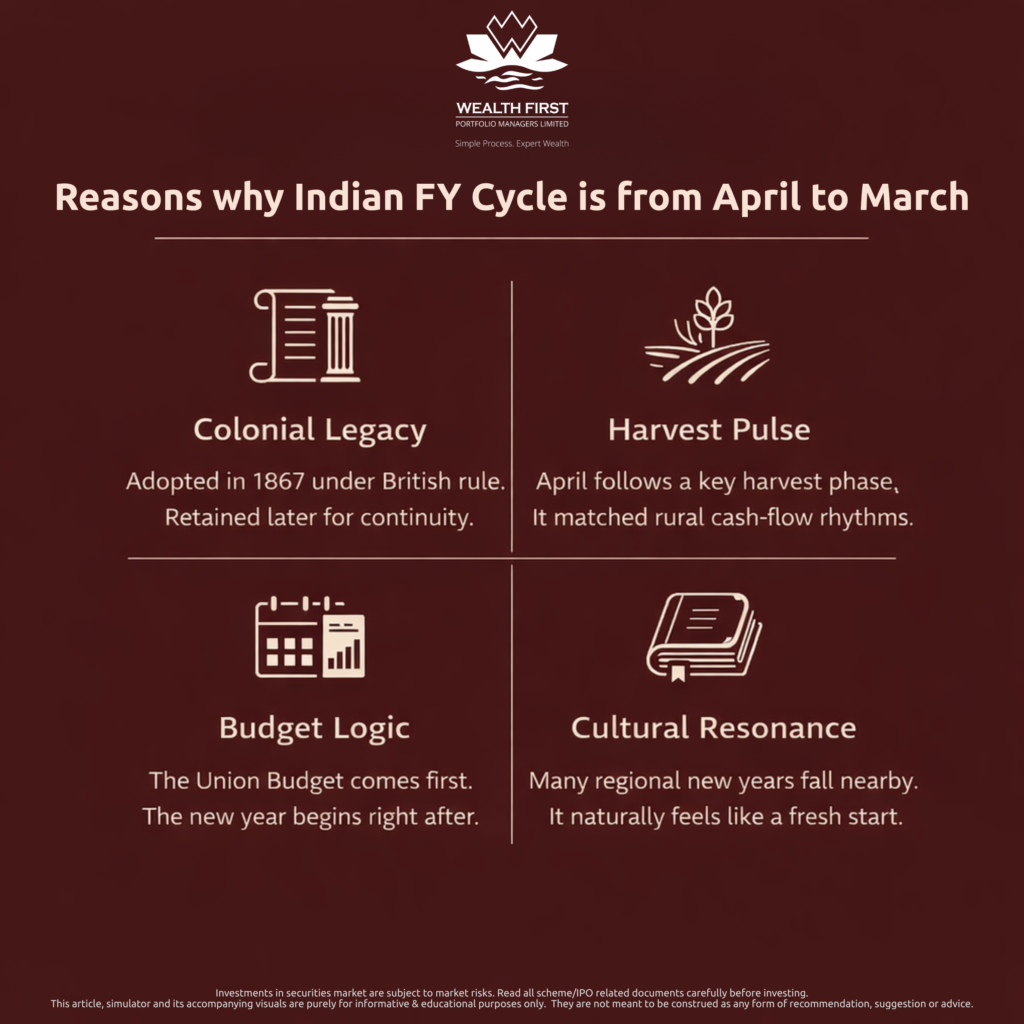
The primary reason our financial year runs from April to March is a colonial inheritance. Before 1867, the Indian financial year actually ran from May to April. However, the British government decided to align the Indian accounting cycle with their own imperial calendar. In 1867, the British shifted their financial year to April to better manage their global accounts. India, being the “crown jewel” of the empire, followed suit. Despite gaining independence in 1947, the Indian government chose to maintain this structure to avoid the massive administrative upheaval and the logistical nightmare of restructuring decades of historical data and legal frameworks.
The Pulse of the Harvest
While the origins are colonial, the survival of this system is deeply tied to India’s identity as an agrarian economy. For centuries, the rhythm of Indian life has been dictated by the monsoon. The major harvest season in India occurs around February and March. This is the time when farmers reap the rewards of their hard labor, and liquidity; cash flow enters the rural economy.
The Logic of the Monsoon and Budgeting
In India, the Union Budget is typically presented in February. By starting the new financial year in April, the government and businesses have a vital two-month window to process the new policies, tax changes, and allocations before the implementation begins.
Furthermore, the period from June to September brings the monsoon, which often slows down construction and infrastructure projects. By starting the year in April, the government can authorize spending and kickstart major projects during the dry months of April and May, ensuring that at least some progress is made before the heavy rains arrive.
A Cultural Resonance
Beyond the spreadsheets and policy papers, the April-to-March cycle feels inherently “Indian” because it mirrors our cultural calendar. The Hindu New Year and various regional New Years across the country almost always fall in late March or April. For the traditional Indian businessman, closing the old books and opening new ones during this period feels auspicious. It is a time of renewal, making the financial transition feel less like a bureaucratic requirement and more like a fresh start for the family’s future.
Conclusion
The April-to-March financial year is a unique blend of historical continuity, geographical necessity, and cultural sentiment. It respects the effort of the farmer, the planning of the policymaker, and the traditions of the household. As you embark on your financial journey whether you are balancing a household budget or managing a diverse investment portfolio viewing this cycle through the lens of our heritage makes the numbers on the screen feel a little more like home.
It is not just about the closing of accounts; it is about preparing the ground for a new season of growth.
————————————————————————————————————–
Disclaimer: The content shared by Wealth First is for general informational and educational purposes only and should not be considered as investment advice, research, or a solicitation to buy or sell any financial product. Past performance is not indicative of future results. All investments are subject to market risks, including possible loss of principal. Readers should consult their financial, legal, or tax advisors before making any investment decisions tailored to their personal circumstances. While utmost care is taken to ensure accuracy of information, Wealth First does not guarantee completeness, reliability, or timeliness, and shall not be liable for any direct or indirect loss arising from reliance on such information.
————————————————————————————————————–
References:
- Times of India: Why are financial and calendar years different?
- TaxOne by Vyapar: Why India’s FY Starts in April
- Shankar IAS Parliament: Significance of the Accounting Year
- HDFC Bank: Reasons Why the Indian Financial Year Starts in April