
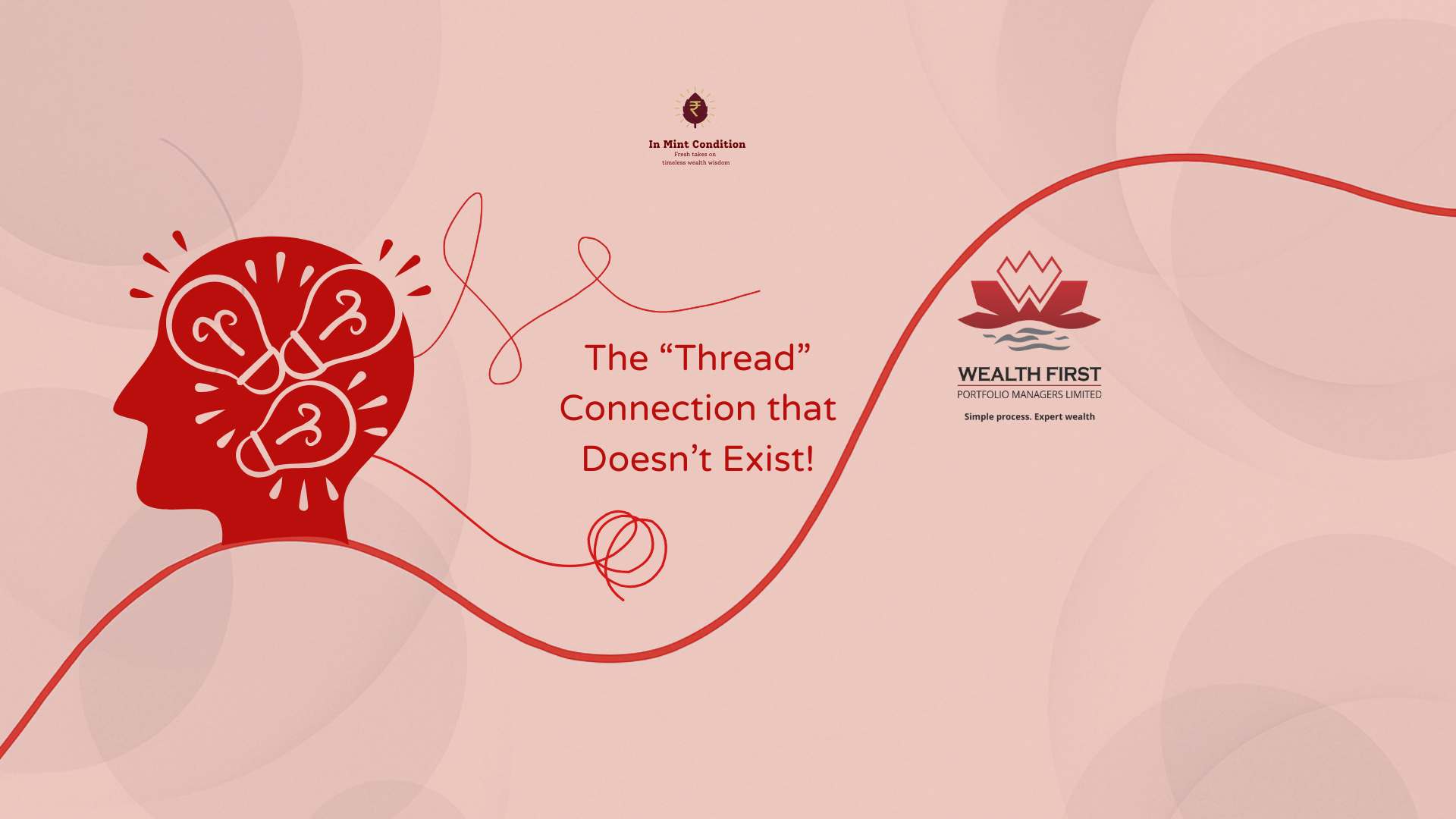
Mohan, a small grocery shop, is known for his warm laugh, his habit of remembering everyone’s preferred brand of atta, and his ability to lighten even the dullest days with a cheerful greeting. But Mohan has a peculiar ritual. Every morning, before opening the shop, he ties a thin, fraying thread around his thumb joint in his hand. Just a simple piece of string. He believes he must have this thread around his thumb whenever he talks to customers.
“If I don’t tie this thread while talking,” he says, “I won’t be able to serve them and do my work properly.” His wife laughs. His friends shake their heads. But Mohan has genuinely convinced himself that good customer service = tying the thread.
A harmless habit? Maybe. But it quietly reveals something deeper about how the human mind works. Mohan has built an illusory correlation: a false link between two things that have nothing to do with each other. It feels real to him, because it worked once. And then twice. And then his mind filled in the rest.

Understanding Illusory Correlation
It is a cognitive bias where our brain creates connections where none exists. A coincidence that over the time becomes a pattern. A pattern becomes a belief. And a belief becomes behaviour. In everyday life, this shows up subtly: “Every time I step out without my umbrella, it rains.” “Wearing white always attracts stains.” “This is my lucky shirt for interviews.” The mind prefers stories. So, it invents one. In personal finance, this bias becomes even more dangerous.
Illusory correlation in investing is when someone falsely assumes that two events, signals, or trends are related — merely because they occurred together a few times. It leads to wrong assumptions, poor judgement, and misplaced confidence. This bias is subtle and comforting which is exactly why it quietly drains wealth.
How Illusory Correlation Distorts Financial Decisions
a. We attach meaning to coincidences
If an investor buys a product and it performs well a few times, they assume: “Whenever I buy this kind of product, returns are always good.” – It may be true at times, but one has to thoroughly review all the parameters before making any investments.
b. We confuse timing with skill
If a person invests before Diwali and markets rise, they assume: “My timing is lucky around festivals.” It is a classic case of coincidence mistaken as capability.
c. We believe narratives that match our emotions
If someone hears that “interest rate cuts always boost markets,” they start believing it as a law, not a loose correlation. In a scenario like this, it is always wise to look into the deeper aspects of such macro changes. The correlation can also change over a time period.
d. We remember the hits and forget the misses
Human memory is biased toward emotionally charged moments. A rare coincidence feels like a pattern because the mind stores it vividly. Over time, these tiny illusions lead to large behavioural mistakes such as exiting too early, entering too late, misjudging risk, and overestimating one’s control over outcomes. This is how people land in financial messes without realising what went wrong.
_____________________________________________________________________________
As Diwali approached, Mohan’s shop got busier. One day, in the rush, he forgot to tie the thread. A long-time customer walked in. Mohan greeted him with his usual smile, discussed the latest rise in tomato prices, joked about school holidays, and packed his items neatly — all without the thread.
The customer didn’t notice anything different. Neither did Mohan. Only after the customer left did Mohan glance at his hand and freeze. The thread wasn’t there. He replayed the whole interaction in his head. His service was as warm, attentive, and effortless as always. Nothing had changed — except the story he had been telling himself. That evening, he quietly removed the thread and placed it inside a drawer. He realised something simple and profound. The thread never made him good at his job. He was good because he cared. And that is exactly how investing works too.
Investors often clutch at certain “threads” — a news channel, a tip from a friend, a date on the calendar— believing these things control outcomes. But the truth is: Your decisions shouldn’t be guided by illusions. They should be guided by understanding, discipline, and clarity. Just like Mohan didn’t need his thread, investors don’t need false correlations to feel in control. It has to be noted that there are certain correlations which are truly applicable. But, we need data, facts, and most importantly courage to learn in order to really filter out the real correlations from the illusory ones.
Key Takeaways
- Illusory correlation makes us link unrelated events and assume they are meaningful.
- This bias is subtle and often feels intuitive, which is why it influences behaviour quietly. In investing, it leads to poor timing, misplaced confidence, and irrational decisions.
- Awareness breaks the illusion.
- Decisions grounded in facts, not coincidences, lead to healthier financial outcomes.
In the world of money — just like in Mohan’s shop — we’re often holding threads that don’t truly matter. The sooner we recognise the illusion, the steadier and more confident our financial decisions become.
Disclaimer
The content shared by Wealth First is for general informational and educational purposes only and should not be considered as investment advice, research, or a solicitation to buy or sell any financial product. Past performance is not indicative of future results. All investments are subject to market risks, including possible loss of principal. Readers should consult their financial, legal, or tax advisors before making any investment decisions tailored to their personal circumstances. While utmost care is taken to ensure accuracy of information and concepts, Wealth First does not guarantee completeness, reliability, or timeliness, and shall not be liable for any direct or indirect loss arising from reliance on such information. All articles contain no offer, inducement, or solicitation for account opening, investment, or trading activity. All characters, events and examples are fictional and used only for illustrative storytelling. Wealth First, its employees, and affiliates expressly disclaim any liability arising from interpretation or use of this material.